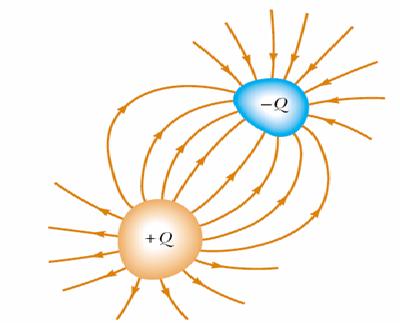
Capacitor which in the electronic circuit is denoted by the letter "C" is a tool that can save energy / electric charge in the electric field, by collecting an internal imbalance of electric charge. Capacitors discovered by Michael Faraday (1791-1867). Unit called the farad capacitor (F). One farad = 9 x 1011 cm2, which means the chip surface area.
The structure of a capacitor made of 2 pieces of metal plates separated by a dielectric material. Dielectric materials are commonly known as air vacuum, ceramic, glass and others. If both ends of the metal plate was given voltage, the positive charges will accumulate on one leg (electrode) metal and at the same time the negative charges accumulated on the metal edges of one another. The positive charge can not flow toward the negative pole and the opposite end of the negative charge can not be heading back up the positive pole, because the dielectric material separated by a non-conductive. Electric charge is stored for no conduction at the ends of the legs. In the wild, this phenomenon occurs when the capacitor charge accumulation-positive and negative charges in the clouds.
Form and Type Capacitor
Based on the usefulness condenser is divided into:
1. Condenser fixed (fixed capacity value can not be changed)
2. Electrolytic Capacitor (Condenser electrolit = Elco)
3. Variable condenser (capacity value can be changed)
In a large capacitor, the capacitance is generally written with sheer numbers. Complete with a maximum voltage value and polarity. For example, the capacitor capacitance elco clearly written for 100μF25v which means that the capacitor / condenser has a capacitance value of 100 μF with a permissible maximum working voltage of 25 volts.
Capacitors are small physical size is usually only read 2 (two) or 3 (three) numbers only. If there are only two numbers, its unit is pF (pico farads). For example, a capacitor that reads two digits 47, then the capacitance is 47 pF capacitor. If there are 3 digits, the first and second digits indicate the nominal value, while the 3rd digit is multiplier. Multipliers in accordance with nominal rates, respectively 1 = 10, 2 = 100, 3 = 1.000, 4 = 10,000, 5 = 100,000 and so on.
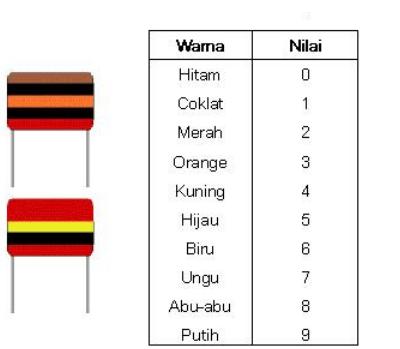
 For polyester capacitor capacitance value can be identified by color as in the resistor.
 The function of the use of capacitors in a circuit:
1. As the coupling between a single series with another series (in PS = Power Supply)
2. As a filter in the series of PS
3. As the generator frequency in the antenna circuit
4. To conserve power at the neon lights
5. Eliminate bounce (jump the fire) when installed on the switch
Capacitor Type
The capacitor consists of several types, depending on the dielectric material. For more simple can be divided into 3 parts, namely electrostatic capacitors, electrolytic and electrochemical.
Electrostatic Capacitor
Electrostatic capacitors are a group of capacitors that are made with a dielectric material of ceramic, film and mica. Ceramic and mica is a popular material and cheap to make small capacitance capacitors. Quantities available from pF to several μF, which is usually for a series of applications relating to high frequency. Groups including the dielectric film material is a material such as polyester (polyethylene terephthalate, or known as Mylar), polystyrene, polyprophylene, polycarbonate, metalized paper and others.
Mylar, MSM, MKT are some examples of the trademark name for the capacitor with a dielectric material film. Generally this group of capacitors is the non-polar.
Electrolytic Capacitors
Electrolytic capacitor group consisting of the capacitors dielectric materials are metal-oxide layer. Generally capacitor including this group is a polar capacitor with the + and - in the body. Why are these capacitors can have a polarity, is due to the manufacturing process uses electrolysis to form the positive pole and negative pole anode cathode.
It has long been known for some metals such as tantalum, aluminum, magnesium, titanium, niobium, zirconium and zinc (zinc) surface can be oxidized to form metal-oxide layer (oxide film). Oxidation layer is formed through a process of electrolysis, as in the process of gold plating. Metal electrode is dipped into the electrolyte solution (sodium borate) and given a positive voltage (anode) and the solution given electrolit negative voltage (cathode). Oxygen in electrolyte solution apart and oxidize the surface of the metal plate. For example, if used Aluminum, it will form a layer of aluminum-oxide (Al2O3) on the surface.

Thus successive metal plate (anode), layer-metal-oxide and the electrolyte (cathode) form a capacitor. In this layer-metal-oxide as the dielectric. From formula (2) great unknown capacitance is inversely proportional to dielectric thickness. Metal-oxide layer is very thin, and thus can be made large enough capacitance capacitors.
Due to economical and practical reasons, generally a lot of metal material used is aluminum and tantalum. Materials are most numerous and cheap aluminum. To get a broad surface, Aluminum plate material is usually rolled radially. So in a way that can be obtained large capacitance capacitors. For example 100uF, 470uF, 4700uF and others, which often also called capacitor elco.
Electrolyte material in tantalum capacitors is a liquid, but there is also a solid. Called the solid electrolyte, but it is not the solution electrolit its negative electrode, but other materials are manganese-dioxide. Thus this type of capacitors can have large capacitance, but becoming more slender and petite. Also because of all the solid, then their work time (lifetime) to be more durable. Capacitors of this type also has a very small leakage current can be understood why so Tantalum capacitors become relatively expensive.
Electrochemical Capacitors
One other type of capacitor is an electrochemical capacitor. Including this type is a battery of capacitors and batteries. In fact, battery and capacitor batteries is very good, because it has a large capacitance and leakage current (leakage current) is very small. This type of capacitors of this type are also still in development to get a large capacitance, but small and light, for example for the application of electric cars and cellular phones.
READ MORE - Form and Type Capacitor
The structure of a capacitor made of 2 pieces of metal plates separated by a dielectric material. Dielectric materials are commonly known as air vacuum, ceramic, glass and others. If both ends of the metal plate was given voltage, the positive charges will accumulate on one leg (electrode) metal and at the same time the negative charges accumulated on the metal edges of one another. The positive charge can not flow toward the negative pole and the opposite end of the negative charge can not be heading back up the positive pole, because the dielectric material separated by a non-conductive. Electric charge is stored for no conduction at the ends of the legs. In the wild, this phenomenon occurs when the capacitor charge accumulation-positive and negative charges in the clouds.
Form and Type Capacitor
Based on the usefulness condenser is divided into:
1. Condenser fixed (fixed capacity value can not be changed)
2. Electrolytic Capacitor (Condenser electrolit = Elco)
3. Variable condenser (capacity value can be changed)
In a large capacitor, the capacitance is generally written with sheer numbers. Complete with a maximum voltage value and polarity. For example, the capacitor capacitance elco clearly written for 100μF25v which means that the capacitor / condenser has a capacitance value of 100 μF with a permissible maximum working voltage of 25 volts.
Capacitors are small physical size is usually only read 2 (two) or 3 (three) numbers only. If there are only two numbers, its unit is pF (pico farads). For example, a capacitor that reads two digits 47, then the capacitance is 47 pF capacitor. If there are 3 digits, the first and second digits indicate the nominal value, while the 3rd digit is multiplier. Multipliers in accordance with nominal rates, respectively 1 = 10, 2 = 100, 3 = 1.000, 4 = 10,000, 5 = 100,000 and so on.
 For polyester capacitor capacitance value can be identified by color as in the resistor.
 The function of the use of capacitors in a circuit:
1. As the coupling between a single series with another series (in PS = Power Supply)
2. As a filter in the series of PS
3. As the generator frequency in the antenna circuit
4. To conserve power at the neon lights
5. Eliminate bounce (jump the fire) when installed on the switch
Capacitor Type
The capacitor consists of several types, depending on the dielectric material. For more simple can be divided into 3 parts, namely electrostatic capacitors, electrolytic and electrochemical.
Electrostatic Capacitor
Electrostatic capacitors are a group of capacitors that are made with a dielectric material of ceramic, film and mica. Ceramic and mica is a popular material and cheap to make small capacitance capacitors. Quantities available from pF to several μF, which is usually for a series of applications relating to high frequency. Groups including the dielectric film material is a material such as polyester (polyethylene terephthalate, or known as Mylar), polystyrene, polyprophylene, polycarbonate, metalized paper and others.
Mylar, MSM, MKT are some examples of the trademark name for the capacitor with a dielectric material film. Generally this group of capacitors is the non-polar.
Electrolytic Capacitors
Electrolytic capacitor group consisting of the capacitors dielectric materials are metal-oxide layer. Generally capacitor including this group is a polar capacitor with the + and - in the body. Why are these capacitors can have a polarity, is due to the manufacturing process uses electrolysis to form the positive pole and negative pole anode cathode.
It has long been known for some metals such as tantalum, aluminum, magnesium, titanium, niobium, zirconium and zinc (zinc) surface can be oxidized to form metal-oxide layer (oxide film). Oxidation layer is formed through a process of electrolysis, as in the process of gold plating. Metal electrode is dipped into the electrolyte solution (sodium borate) and given a positive voltage (anode) and the solution given electrolit negative voltage (cathode). Oxygen in electrolyte solution apart and oxidize the surface of the metal plate. For example, if used Aluminum, it will form a layer of aluminum-oxide (Al2O3) on the surface.

Thus successive metal plate (anode), layer-metal-oxide and the electrolyte (cathode) form a capacitor. In this layer-metal-oxide as the dielectric. From formula (2) great unknown capacitance is inversely proportional to dielectric thickness. Metal-oxide layer is very thin, and thus can be made large enough capacitance capacitors.
Due to economical and practical reasons, generally a lot of metal material used is aluminum and tantalum. Materials are most numerous and cheap aluminum. To get a broad surface, Aluminum plate material is usually rolled radially. So in a way that can be obtained large capacitance capacitors. For example 100uF, 470uF, 4700uF and others, which often also called capacitor elco.
Electrolyte material in tantalum capacitors is a liquid, but there is also a solid. Called the solid electrolyte, but it is not the solution electrolit its negative electrode, but other materials are manganese-dioxide. Thus this type of capacitors can have large capacitance, but becoming more slender and petite. Also because of all the solid, then their work time (lifetime) to be more durable. Capacitors of this type also has a very small leakage current can be understood why so Tantalum capacitors become relatively expensive.
Electrochemical Capacitors
One other type of capacitor is an electrochemical capacitor. Including this type is a battery of capacitors and batteries. In fact, battery and capacitor batteries is very good, because it has a large capacitance and leakage current (leakage current) is very small. This type of capacitors of this type are also still in development to get a large capacitance, but small and light, for example for the application of electric cars and cellular phones.